

Automatic Concrete Batching Plant
2026.05.13
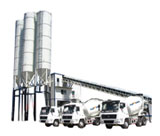
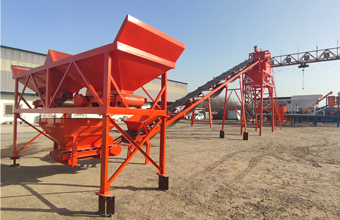
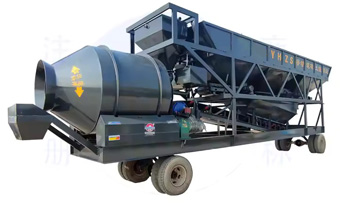
As a production technology manager at Haomei Machinery with 20 years of experience in the concrete equipment field, I have witnessed the revolutionary transformation of concrete batching plants from semi-automatic to fully automatic. Fully automatic concrete batching plants are not simply equipment upgrades, but a qualitative leap in production mode. They shift commercial concrete production from an "experience-dependent" to a "data-driven" model, achieving leapfrog improvements in efficiency, quality, cost, and safety, making them particularly suitable for the large-scale infrastructure needs of emerging markets in Asia, Africa, and the Middle East.
1. Increased Efficiency: From "Intermittent Production" to "Continuous Intelligent Manufacturing"
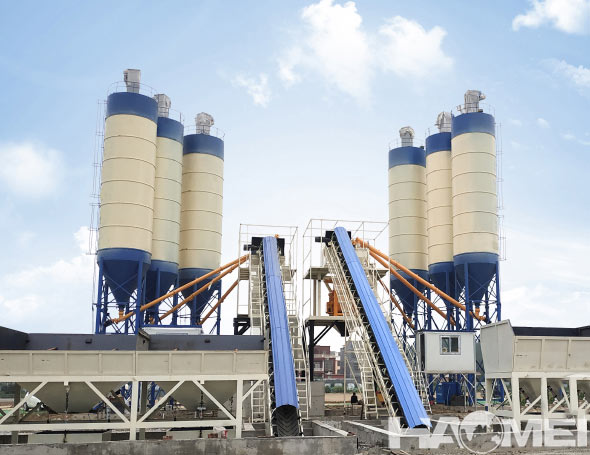
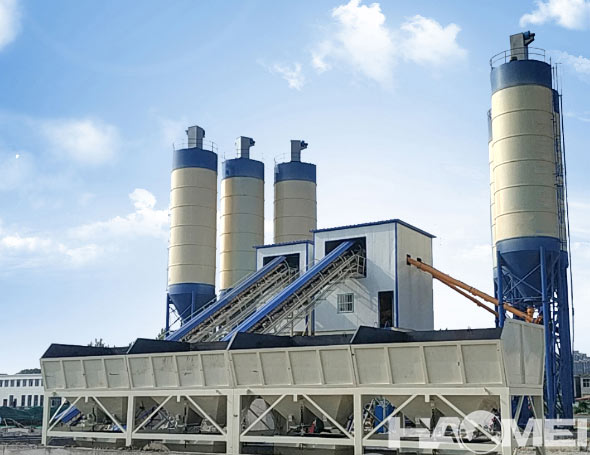
Taking the mainstream HZS180 concrete batching plant as an example, the theoretical capacity of a fully automatic concrete batching plant reaches 180 m³/h, with actual operating efficiency consistently above 90% of the theoretical value, while a semi-automatic plant of the same specifications can only achieve 80-120 m³/h. Behind this lies three core breakthroughs:
First, the PLC control system combined with high-precision sensors reduces batching time from 8-10 minutes per batch manually to 3-5 minutes per batch, increasing efficiency by 60%.
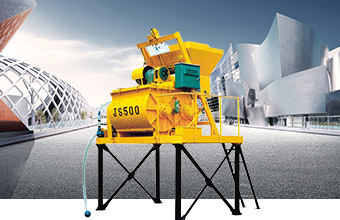
Second, the twin-shaft forced concrete mixer (such as the JS3000) combined with AI optimization algorithms controls mixing time to 60-90 seconds, achieving uniformity of over 95%, saving 30% of time compared to traditional methods.
Finally, full-process automation enables 24-hour uninterrupted production, increasing the annual capacity of a single station to 1 million m³, equivalent to the total capacity of three traditional concrete batching plants.
2. Quality Revolution: From "Human Control Error" to "Precise Controllability"
The core of concrete quality lies in the accuracy of mix proportions and homogeneity. The fully automatic system ensures quality through three key technologies:
First, metering accuracy reaches ±0.3% (powder) / ±0.5% (aggregate), far exceeding industry standards, increasing the accuracy of mix proportion execution from the traditional 85% to over 98%;
Second, online moisture content detection and automatic water correction dynamically adjust the mix proportion in real time, resolving strength deviations caused by aggregate moisture content fluctuations;
Third, full parameter monitoring of the mixing process, with the system automatically recording production data for each batch, enabling quality traceability.
3. Cost Optimization: From "High Consumption and Low Efficiency" to "Lean Operation"
The return on investment for a fully automatix cocnrete batching plant typically takes 1.5-2 years, primarily due to triple cost reductions:
60% reduction in labor costs, requiring only 2-3 operators per plant, replacing the traditional 6-8 person configuration, saving over 500,000 RMB in labor costs annually;
3-5% reduction in raw material loss, precise metering avoids over-investment and waste, saving approximately $1.2 million in cement and other material costs based on an annual production capacity of 1 million m³;
14-18% reduction in energy consumption, with a variable frequency drive system and intelligent standby mode, the HZS180 plant can save up to 300,000 kWh of electricity annually.
In the long term, the maintenance cost of a fully automated plant is actually lower because the system has a fault warning function, which can detect and resolve problems in advance, reducing downtime losses.
4. Safety and Environmental Protection: From "Risk and Hazards" to "Green Production"
Safety is the bottom line for the operation of a concrete batching plant. The fully automatic concrete batching plant utilizes remote control, video monitoring, and infrared protection technologies to achieve zero contact between personnel and hazardous areas, reducing the accident rate by 90%. In terms of environmental protection, the fully enclosed structure and negative pressure dust removal system ensure dust emission concentrations are ≤10mg/m³, 50% lower than national standards; noise levels are controlled below 85dB, meeting nighttime construction requirements. The mixing plant we provided for the Mombasa Port project in Kenya, employing a fully automated sealed design, effectively solved the port's dust pollution problem, earning special commendation from the local environmental protection department.
As a veteran in the industry, I deeply understand that fully automatic concrete batching plants are not just equipment, but strategic tools for ready-mixed concrete companies to enhance their core competitiveness. With data at its core and intelligence as its driving force, it has completely transformed traditional production models. For export customers seeking large-scale, high-quality, and low-cost production, choosing Haomei Machinery's fully automatic batching plants means choosing more efficient production, more stable quality, and more substantial profits, providing a solid guarantee for global infrastructure projects.


