

Concrete Batching Plant 30 m3/h
2025.11.26
A concrete batching plant 30 m3/h is a type of equipment used to produce concrete, capable of producing 30 cubic meters of concrete per hour. This concrete batching plant with capacity 30m3/hr is typically used in small to medium-sized construction projects, such as roads and buildings, to meet higher concrete demands.
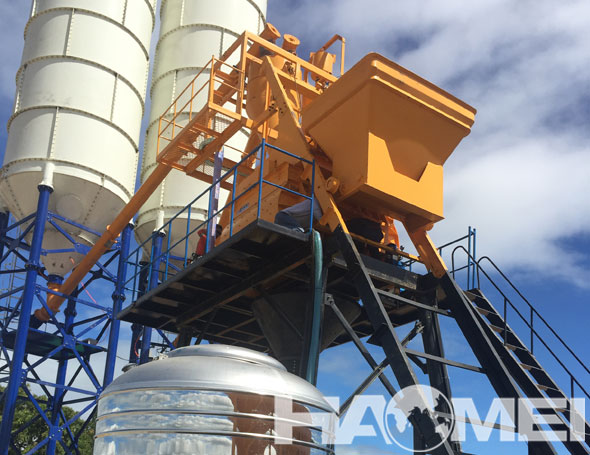
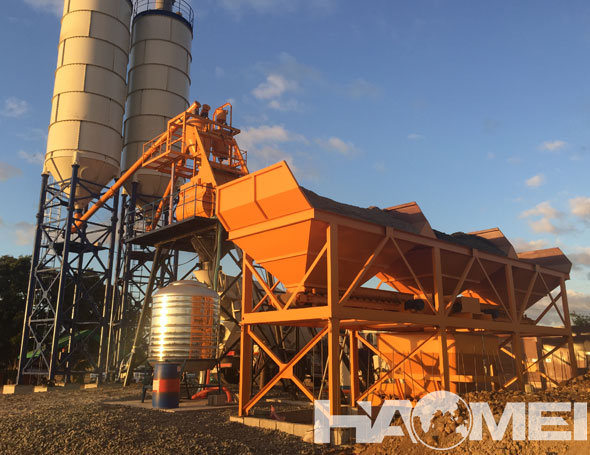
There are many types of 30 cubic meter/hour concrete batching plants, such as the HZS35 concrete batching plant, the YHZS35 mobile concrete batching plant, dry mixing concrete plant 30m3/h, and 35m3/h drum mobile concrete batching plants.
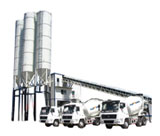
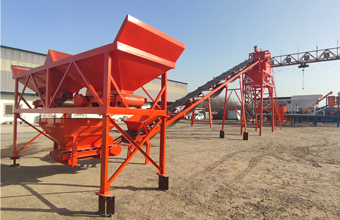
1. HZS35 concrete batching plant
- Core parameters:
Theoretical production rate: 35 cubic meters/hour (In actual production, the batching speed can be adjusted to approach the required 30 cubic meters/hour).
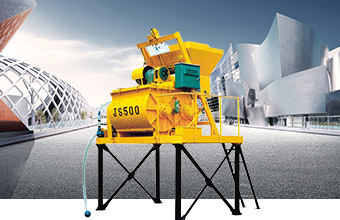
Mixing host: JS750 twin-shaft forced mixer, high mixing efficiency, suitable for high-strength concrete.
Batching system: PLD1200 batching machine, aggregate weighing accuracy ±2%, cement, water, and admixture weighing accuracy ±1%.
Control method: Supports manual/automatic dual modes, integrated intelligent control and remote communication interface.
Discharge height: 3.8 meters, adaptable to various construction scenarios.
- Applicable scenarios:
Small to medium-scale construction projects: such as residential buildings, commercial complexes, etc., requiring a stable supply of concrete.
Precast component plants: producing precast beams, slabs, columns, and other components, with high requirements for concrete quality.
Commercial concrete production plants: serving as small production lines to meet regional concrete needs.
- Advantages:
Stable production: modular design, strong anti-interference ability, suitable for long-term fixed operation.
Accurate metering: high-precision weighing system ensures accurate concrete mix proportions.
Convenient maintenance: modular structure, high efficiency in troubleshooting and repair.
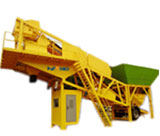
2. YHZS35 mobile concrete batching plant
- Core Parameters:
Theoretical production rate: 35 cubic meters/hour (flexibly adjustable to 30 cubic meters/hour).
Mixing host: JS750 twin-shaft forced mixer, same as the stationary type, with excellent mixing performance.
Mobile design: the entire machine is integrated into a trailer unit, enabling rapid transfer via trailer, with a moving speed of up to 15 km/h.
Installation time: No foundation is required when the ground is flat and firm; production can begin on the same day.
Total weight: 23.5 tons; all accessories are moved with the station during relocation.
- Applicable scenarios:
Temporary construction projects: Such as municipal road repairs, bridge reinforcement, etc., requiring frequent relocation of the mixing plant.
Remote area projects: Such as water conservancy facilities, rural infrastructure, etc., where transportation is inconvenient and rapid deployment is required.
Rental market: Equipment can be rented out to meet the short-term needs of different customers.
- Advantages:
High mobility: Trailer-mounted design for rapid relocation, saving construction preparation time.
Easy installation: No foundation construction required, reducing initial investment costs.
Strong adaptability: Can operate stably in an ambient temperature range of -20℃ to 50℃; heating devices are optional for winter use.
3. Dry mix concrete plant 30m3/h
- Core parameters:
Production capacity: Some models can be adjusted to 30 cubic meters/hour (specific model confirmation required).
Mixing unit: Single-shaft or twin-shaft concrete mixer, suitable for dry-mixed mortar production.
Ingredient batching system: Aggregates and powders (cement, fly ash, etc.) are weighed independently with an accuracy of ±1%.
Drying system: Equipped with drying equipment to ensure aggregate moisture content meets requirements.
- Applicable scenarios:
Dry-mixed concrete production: Such as masonry mortar, plastering mortar, floor mortar, etc.
Specialty concrete production: Such as waterproof concrete, refractory concrete, etc., requiring pre-mixing of dry materials.
- Advantages:
Stable product quality: Pre-mixing of dry materials reduces on-site mixing errors.
Environmentally friendly and energy-saving: Closed production reduces dust emissions and meets environmental protection requirements.
Convenient storage: Dry-mixed concrete can be stored for a long time, facilitating construction scheduling.
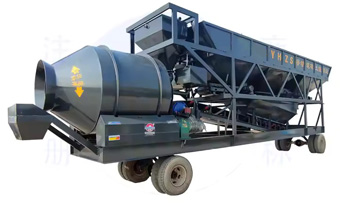
4. Drum mobile concrete batching plant 35m3/h
- Core parameters:
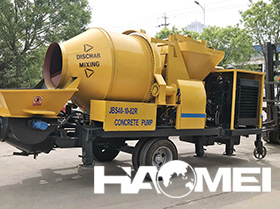
Production capacity: Some small drum mixer mobile concrete batching plants can reach 30 cubic meters/hour.
Mixing unit: Drum mixer, simple structure, suitable for ordinary concrete.
Mobility: Wheeled or towed design, can be manually pushed or pulled by a tractor.
Operation method: Mostly manual or semi-automatic control, simple to operate.
- Applicable scenarios:
Small-scale construction projects: such as rural self-built houses, small road repairs, etc.
Temporary concrete needs: such as temporary fences, ground pouring, etc.
- Advantages:
Low cost: Inexpensive equipment, suitable for customers with limited budgets.
Easy operation: No professional training required; anyone can operate it.
Convenient maintenance: Simple structure, low failure rate, and low maintenance costs.
If you need a 30 m3/hr concrete batching plant, you should first conduct a needs analysis to determine the type of concrete and production capacity required for your project. Next, select suitable equipment. When choosing a site, consider its proximity to the construction site and raw material supply locations, and ensure sufficient space. Focus on environmental protection and safety, and train operators. Finally, ensure professional installation and commissioning of the equipment, and develop a regular maintenance plan to guarantee the efficient and stable operation of the concrete batching plant.


