

Four Measures for Concrete Batching Plants in Tropical Climate
2026.09.22
In tropical regions such as Southeast Asia, South Asia, and Middle East, concrete batching plants face a combination of four environmental challenges: high temperatures, high humidity, heavy rainfall, and intense ultraviolet (UV) radiation. Standard concrete batching plant equipment often suffers from high failure rates and inconsistent concrete quality under these conditions. Haomei Machinery has implemented technical upgrades across four key areas—concrete quality assurance, equipment heat dissipation, corrosion and moisture protection, and electrical system protection—ensuring stable, long-term operation in ambient temperatures exceeding 45°C.
High-Temperature Conditions: Cooling Systems to Regulate Discharge Temperature
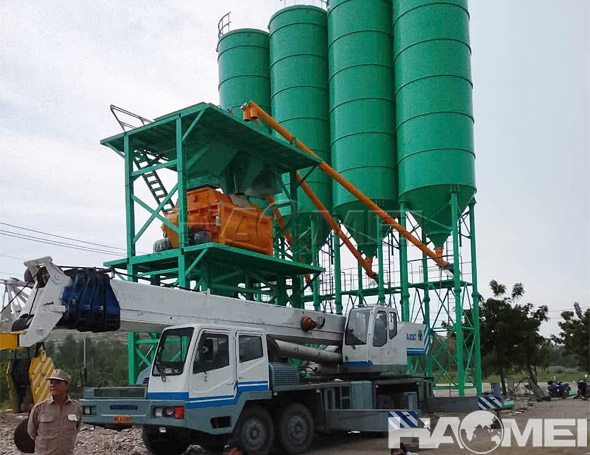
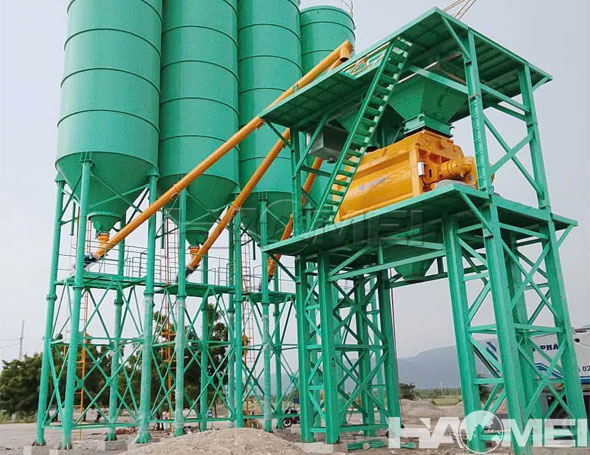
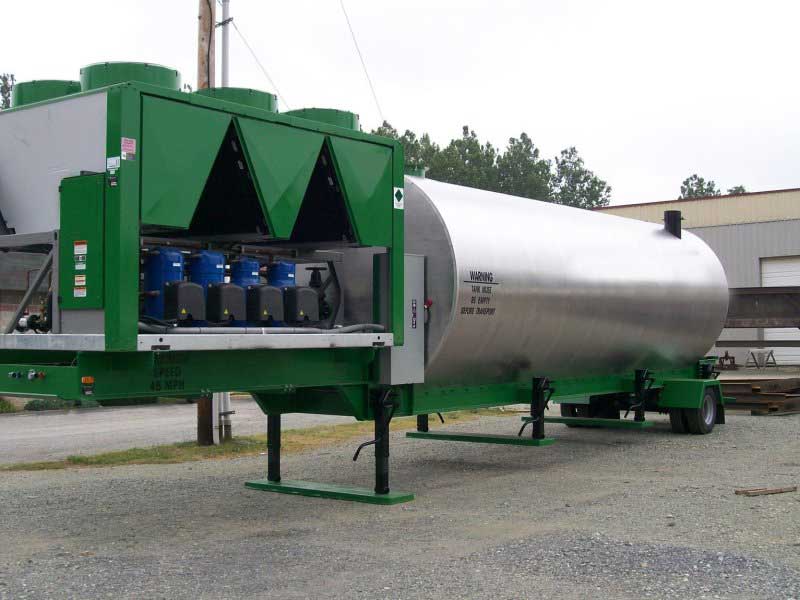
Summer ambient temperatures in tropical regions frequently reach 40–45°C. Concrete produced using standard-temperature mixing water can exceed a discharge temperature of 35°C, leading to rapid slump loss and abnormal early-stage strength development. Haomei’s concrete batching plant for tropical climate come standard with a dual cooling system: first, a chilled water unit lowers mixing water temperature to 5–10°C, allowing for precise control of water volume and temperature per batch; second, a supplementary flake ice unit automatically dispenses flake ice—replacing a portion of the mixing water—based on the mix ratio for mass concrete pours, stabilizing the discharge temperature within the 28–32°C range. Built-in temperature sensors monitor the discharge temperature in real-time and automatically adjust the ratio of chilled water to flake ice without manual intervention. Additionally, aggregate stockpiles are fitted with sunshades to prevent direct exposure to sunlight, reducing the initial aggregate temperature by 8–10°C and mitigating the impact of high heat on concrete quality at the source.
Enhanced Heat Dissipation: Redundant Design for Motors and Hydraulic Systems
Motors operating at full load for extended periods in high-temperature environments are prone to overheating and tripping. Haomei’s concrete batching plant in tropical climates features upgraded heat dissipation capabilities for all power units through redundant design: motors for the main mixer, screw conveyors, and air compressors are selected based on a 50°C ambient temperature rating; heat dissipation capacity is increased by 30% compared to standard models, and motor winding temperature rise is kept within 80K. The hydraulic station is equipped with an independent air-cooled radiator to stabilize oil temperature below 55°C, preventing issues such as reduced hydraulic oil viscosity and system pressure fluctuations caused by high heat. Forced-air exhaust fans are installed atop the electrical control cabinet, maintaining an internal temperature 5–8°C lower than the ambient temperature to ensure the stable operation of the PLC and weighing instruments in high-heat conditions.
Corrosion and Moisture Resistance: Combating High Humidity and Salt Spray
In tropical coastal regions, humidity often exceeds 80% year-round, and salt spray corrosion is common, making standard steel structures and electrical components highly susceptible to rust. Haomei’s tropical-type concrete batching plant equipment undergoes a three-layer anti-corrosion treatment: steel surfaces are first sandblasted to the Sa2.5 standard, followed by the application of an epoxy zinc-rich primer, an epoxy micaceous iron oxide intermediate coat, and a polyurethane topcoat (total dry film thickness ≥240μm); hot-dip galvanizing is available as an upgrade for coastal areas. Electrical junction boxes and sensor connectors feature IP65-rated protection, with waterproof sealing at cable entry points to prevent short circuits caused by the ingress of humid air. All rubber seals and conveyor belts utilize aging-resistant formulations, offering 40% higher UV resistance and a service life 30% longer than standard rubber components.
Handling Torrential Rain: Real-Time Aggregate Moisture Compensation
Tropical regions frequently experience sudden downpours, causing aggregate moisture content to fluctuate by 3–5% in a short period—variations that can directly lead to an uncontrolled water-cement ratio. Haomei’s concrete batching plants come standard with an online aggregate moisture analyzer; this system captures real-time moisture data and feeds it to the PLC, which automatically calculates and adjusts the net water addition to offset mix-ratio deviations caused by rainfall. A rain canopy is installed above the batching machine to prevent direct rainfall onto the aggregate stockpiles. The entire electrical system features lightning protection and grounding (with grounding resistance ≤4Ω) to ensure the safety of both equipment and personnel during thunderstorms.
Data from years of overseas projects indicates that equipment failures in tropical operating environments stem from the following causes: approximately 60% are due to poor heat dissipation, 25% relate to moisture or corrosion issues, and the remaining 15% result from mix-ratio fluctuations caused by rainfall. Haomei’s concrete batching plant for tropical climate systematically addresses these three common issues; equipment utilizing this solution achieves a mean time between failures (MTBF) in hot, humid regions—such as Southeast Asia and the Middle East—that is over 40% longer than that of standard models, making it a highly acclaimed choice among customers in tropical markets.


