

How To Build A Concrete Batching Plant?
2026.07.29
Build a concrete batching plant is a systematic project encompassing process planning, equipment selection, civil construction, and compliance acceptance. Many projects prioritize later construction phases while neglecting early selection and planning, leading to problems such as capacity mismatch, high operation and maintenance costs, and environmental non-compliance. A professional concrete batching plant setup process should focus on scientific selection, adhering to the principles of "compliance first, planning in advance, phased implementation, and item-by-item acceptance," and proceeding systematically through six core phases to ensure the plant's production efficiency and long-term operational value from the outset.
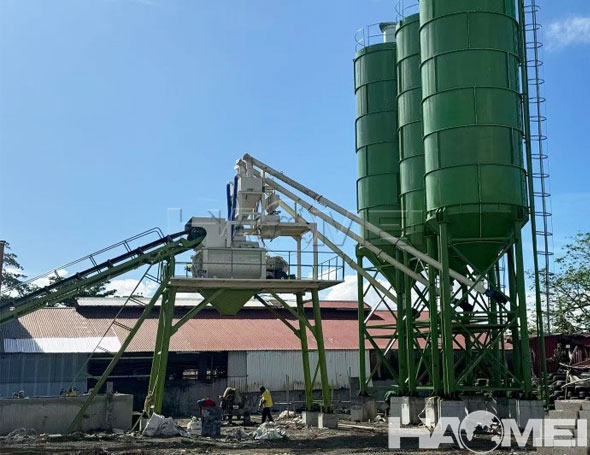
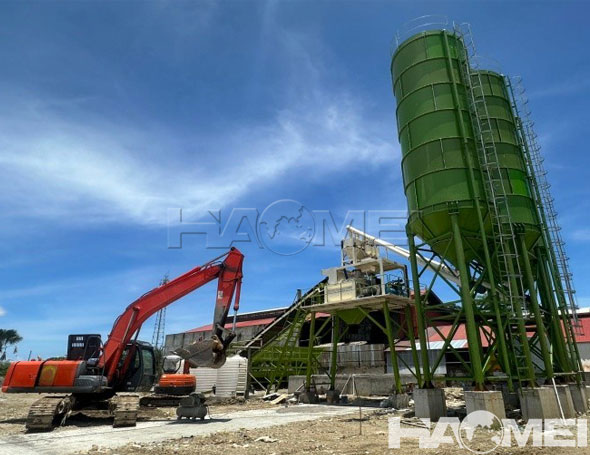
The first phase is the preliminary project approval and site technical assessment, which is the fundamental prerequisite for project implementation. First, based on the target market capacity, service radius, and construction period requirements, the capacity demand range is calculated to initially narrow down the concrete batching plant model selection. Second, a site-specific assessment is conducted, focusing on verifying the geological bearing capacity of heavy-load areas (recommended not less than 200 kPa for silo areas), the load level of access roads, and environmental protection distances. Simultaneously, spatial constraints such as surrounding pipelines and high-voltage lines are investigated. At the same time, project filing, environmental impact assessment pre-approval, and other compliance procedures are completed to confirm that the site construction complies with local housing and environmental protection standards.
The second stage is process planning and scientific model selection, which is the core link determining the project's return on investment and also the step most prone to decision-making errors. Selection should not be based solely on nominal capacity; a systematic match must be made from three dimensions:
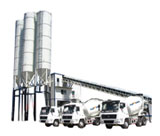
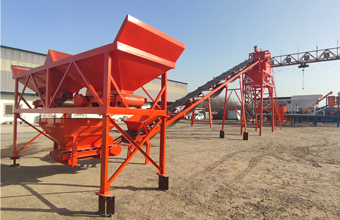
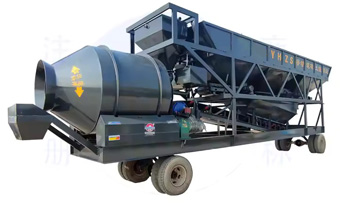
First, concrete batching plant capacity must match the application scenario. Small, short-term projects are suitable for HZS25-HZS90 concrete batching plants, offering flexible deployment and convenient relocation. County-level commercial concrete and medium-sized infrastructure projects should prioritize mainstream HZS120-HZS180 concrete batching plants, balancing efficiency and cost. Large commercial concrete plants and cluster infrastructure projects can utilize high-yield HZS200-HZS270 concrete mixing stations, with dual-unit parallel operation further exceeding capacity limits.
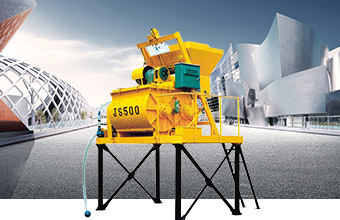
Second, core equipment must match. For conventional grade concrete production, JS series twin-shaft concrete mixers are recommended, offering excellent cost-effectiveness and ease of maintenance. For high-standard special concrete and high-strength continuous production scenarios, Sicomar MAO series mixers are recommended, offering superior homogeneity and wear resistance.
Thirdly, environmental protection and adaptability are crucial. Export projects should prioritize modular designs and complete sets of equipment compatible with local voltage and environmental standards. Haomei's HZS series concrete mixing plants all support customized environmental configurations and operating condition adaptations, avoiding later modification costs from the selection stage.
The third stage involves foundation engineering and civil construction, ensuring stable equipment operation. Heavy-load components such as silos and main buildings have specialized foundation designs based on equipment loads, prioritizing reinforced concrete independent foundations. The positioning of embedded parts is strictly controlled for elevation and plane errors, with the main unit foundation's planeness deviation not exceeding 2mm/m. Simultaneously, site hardening, drainage networks, and water collection wells are completed, and the aggregate area is equipped with a two-way drainage slope to avoid significant fluctuations in raw material moisture content during the rainy season.
The fourth stage involves equipment installation and process accuracy verification. Concrete batching plant installation follows the principle of "main structure first, then auxiliary structures; static first, then dynamic": first, the steel structure hoisting and verticality calibration of the silos and main building are completed, then the mixing host, batching machine, and conveying equipment are installed sequentially, and finally, air lines, lubrication lines, and electrical lines are laid. During the process, the coaxiality of the main unit base and the docking accuracy of the screw conveyor are checked segment by segment to avoid cumulative deviations that could lead to later malfunctions.
The fifth stage involves phased commissioning and specialized acceptance. Commissioning is conducted in three progressive steps: single-machine no-load, whole-station integrated operation, and trial production with materials, calibrating metering accuracy and concrete homogeneity. After successful trial production, environmental protection acceptance, metrological instrument calibration, and safety production verification are completed sequentially to obtain formal operating qualifications.
The sixth stage involves system establishment and formal production. Standardized operating procedures, tiered inspection logs, and spare parts inventory are established. Pre-job training for operators is completed to ensure the site enters normalized and standardized operation.
In summary, build a concrete batching plant is not a simple equipment assembly project, but a complete chain of system engineering with equipment selection at its core. Selecting the right HZS series concrete batching plant equipment, combined with a standardized construction process, is essential to achieving efficient, compliant, and long-term operational goals.


