

60m3/h Concrete Plant ROI and Profit Margin
2026.10.21
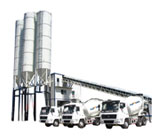
The 60m3/h (HZS60) concrete batching plant is a preferred choice for both the commercial ready-mix market and self-constructed infrastructure projects. It strikes an optimal balance between production capacity and the threshold for capital investment, making it well-suited for county-level markets and medium-scale infrastructure projects. Based on global project operational data from Haomei Machinery and market projections for 2026, the following analysis provides a 60m3/h concrete plant ROI and profit margin breakdown across four dimensions: initial investment, profit estimation, payback period, and key influencing factors.
Initial Investment
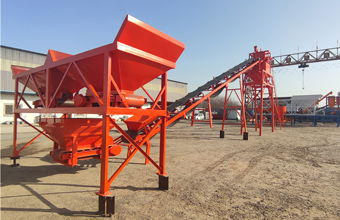
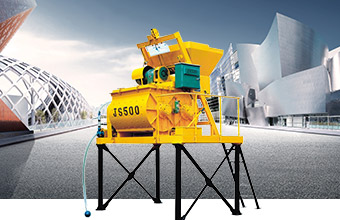
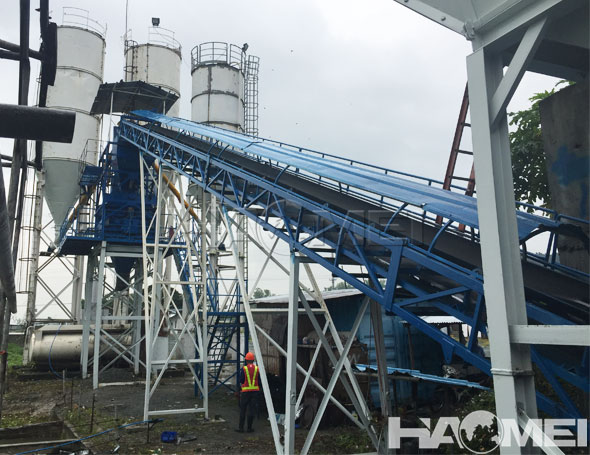
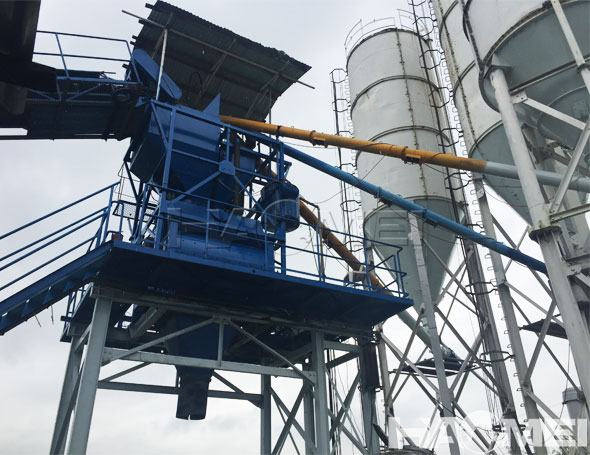
The initial investment is calculated based on the total cost required to make the concrete plant fully operational, categorized into five main components. Regarding core equipment, a standard HZS60 belt-conveyor concrete batching plant—featuring a JS1500 twin-shaft mixer, a three-bin aggregate batcher, two 100-ton powder silos, a fully automatic PLC control system, and a pulse-jet dust collection system—carries an FOB factory price of $53,000–$65,000. Shipping and customs clearance—estimated based on three 40HQ containers—incur costs (including ocean freight, port charges, and import clearance) totaling $14,000–$19,000, with a variance of approximately 15% depending on the destination port. Civil works and auxiliary infrastructure—covering equipment foundations, site paving, material storage shed foundations, and power supply—require an investment of $22,000–$32,000 under standard geological conditions (increasing by 20% for soft soil or high-rainfall regions). Installation and calibration—including on-site hoisting, commissioning, weighing system calibration, and personnel training—cost between $8,000 and $12,000. Operational working capital, covering initial raw material procurement, labor costs, and spare parts inventory, should be budgeted at $70,000–$100,000 to ensure stable cash flow during the early stages of production. In total, the initial project investment is estimated at $167,000–$228,000, with a median value of approximately $197,500.
Profit Estimation
The profitability model is based on actual operational parameters from emerging markets. Regarding production capacity, the HZS60 concrete batching plant has a theoretical hourly capacity of 60 m³; however, its stable, real-world production efficiency is approximately 83%–87% of this figure, or 50–52 m³/h. Assuming 240 operating days per year with a single 6-hour daily shift, the annual output is estimated at 72,000–75,000 m³, with a median of 73,500 m³. Market pricing is based on the projected 2026 ex-works average price for C30 ready-mix concrete in emerging markets across Asia, Africa, and the Middle East—ranging from $78 to $92 per m³, with a median of $85/m³. In terms of cost structure, raw materials (aggregates, cement, and admixtures) constitute the primary expense, accounting for 68%–72% of revenue. Labor costs represent 5%–7%; electricity and fuel account for 4%–5%; equipment maintenance and wear parts make up 2%–3%; equipment depreciation (calculated using the straight-line method over 8 years) accounts for 2%–3%; and management, sales, and taxes represent 5%–6%. Consequently, the unit comprehensive production cost is approximately $67–$75/m³, with a unit gross profit of $11–$17/m³ (a gross margin of 14%–19%) and a unit net profit of $6–$10/m³ (a net margin of 7.7%–11.8%). Based on an annual output of 73,500 m³, the annual net profit is estimated at $441,000–$735,000, with a median of approximately $588,000.
Investment Payback Period
The static investment payback period varies significantly based on capacity utilization. Assuming a median initial investment of $197,500 and an annual net profit of $588,000, the static payback period is approximately 4.1 months. If capacity utilization drops to 50% (equivalent to 3 hours of operation per day), the annual net profit would be approximately $294,000, extending the payback period to about 8 months. In actual operations, the cash recovery cycle—influenced by accounts receivable terms, fluctuations in raw material prices, and market competition—typically ranges from 6 to 12 months. A commercial ready-mix concrete project in East Africa, equipped with a Haomei Machinery HZS60 standard concrete batching plant, has achieved a 75% capacity utilization rate—driven by robust local demand for infrastructure—allowing the investor to fully recoup their initial investment within just 10 months of operation.
Practical experience shows that capacity utilization is the primary variable determining Return on Investment (ROI). Before investing, it is advisable to assess the volume of existing and planned residential, municipal, and infrastructure projects within a 30-kilometer radius to ensure an annual capacity utilization rate of at least 50%. Sourcing raw materials locally—such as aggregates and cement—can significantly reduce costs; local procurement is 10%–15% cheaper than long-distance transport, directly boosting net profit margins by 2–3 percentage points. When selecting equipment, prioritize weighing accuracy and reliability. The Haomei HZS60 concrete plant features a high-precision electronic weighing system that keeps measurement errors within ±1%, minimizing raw material waste and yielding annual savings of approximately $20,000–$30,000 in material costs.


