

What Is Fixed Concrete Plant?
2026.08.19
Many people's understanding of stationary concrete batching plants is limited to "mixing equipment fixed to the ground and unable to move," which only scratches the surface. As someone working in the construction machinery industry, I firmly believe that the core essence of a fixed concrete plant is a high-precision concrete production system supported by a permanently solidified foundation and designed for long-term stable mass production. "Fixed" is merely a formality; behind it lies a comprehensive upgrade in precision, lifespan, and production capacity stability. It is also the core production capacity base for global commercial concrete operations and large-scale infrastructure projects.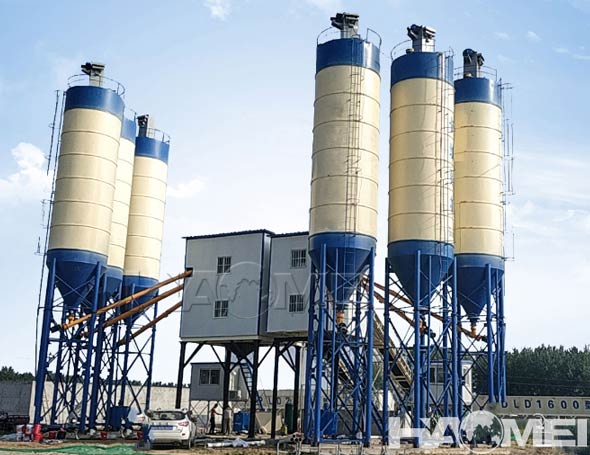
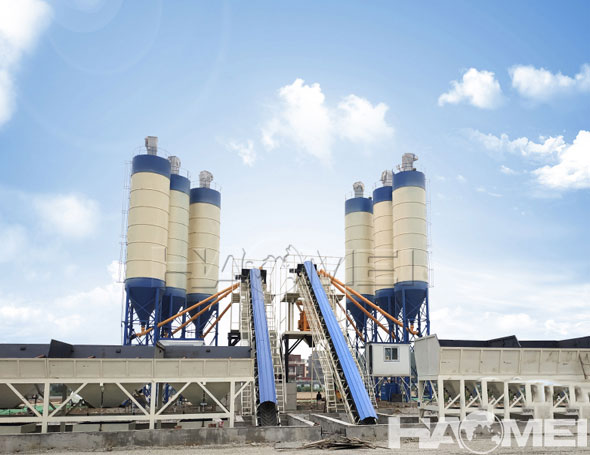
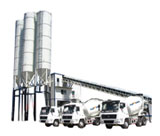
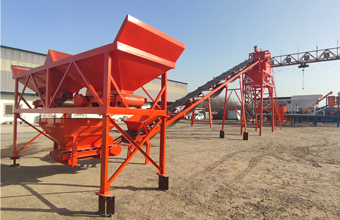
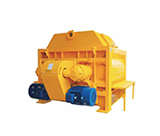
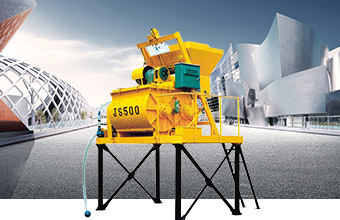
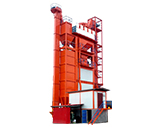
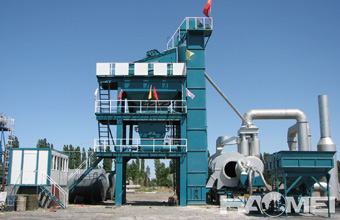
From a core component perspective, a fixed concrete batching plant typically consists of six modules: aggregate batching unit, conveying unit, main mixing tower, powder silo, metering system, and electrical control system. Mainstream production capacities range from 25 m3/h to 240 m3/h, corresponding to JS500 to JS4000 series twin-shaft forced concrete mixers, capable of stably producing all grades of C10-C60 ordinary, pumped, and some special concrete. Unlike the compromises made by mobile concrete plant equipment, fixed concrete batching plant metering units are all independently installed on fixed bases, eliminating accuracy drift caused by relocation: the dynamic metering error of aggregates is consistently ≤±2%, and the metering error of cement, water, and admixtures is ≤±1%, fully complying with the EN 206 international concrete standard. In contrast, the metering accuracy of mobile equipment generally decreases by 0.5-1 percentage points after more than three relocations. This is the core reason why almost all established commercial concrete plants choose fixed equipment.
The stability of long-term mass production is the core advantage of fixed concrete plant equipment that is most easily overlooked. Belt-type fixed concrete batching plants maintain a stable continuous operation output rate of 85%-90%, while skip hopper type fixed concrete batching plants can reach 75%-80%. With regular maintenance, the capacity reduction rate will not exceed 3% within 5 years. The main steel structure is welded from standard steel sections, with a designed service life of over 10 years; the main unit lining and mixing blades are made of thickened high-manganese steel, with a service life of 7000-8000 hours under normal operating conditions. The cumulative capacity over its entire life cycle is more than 40% higher than that of comparable mobile concrete batching plant equipment. Meanwhile, the modular fixed layout provides ample expansion space, allowing for the addition of environmental protection and energy-saving modules such as pulse dust removal, sand and gravel separation and recycling, and waste heat recovery as needed, adapting to the upgrade requirements of long-term operation. This is something that highly integrated mobile concrete plants can hardly achieve.
Over the years, I have often advised clients to choose between fixed and mobile concrete plant based on two key indicators: project cycle and cumulative production capacity. For single-site projects with a cycle exceeding 18 months and a cumulative concrete consumption exceeding 50,000 cubic meters, or for long-term operational commercial concrete plants, a fixed concrete plant is definitely the better solution—although the initial civil engineering and installation cycle is slightly longer, standard models can usually be put into production in 7-15 days, but the difference in long-term production precision, stability, and unit cost advantage will quickly become apparent. Conversely, for projects with short construction periods and dispersed locations, such as emergency repairs and rural road network projects, the flexibility of a mobile concrete plant is more suitable. There is no absolute superiority or inferiority, only the degree of matching with the scenario.
Essentially, a fixed concrete plant is not a "concrete mixing plant that cannot be moved," but rather a standardized production capacity base designed for long-term production. It achieves stable precision and lifespan through a solidified foundation, and supports diverse expansion needs with a modular structure. It is the core carrier for concrete production to move from "temporary construction support" to "normalized commercial operation."


