
How Much Does A Concrete Batch Plant Cost?
2026.11.12
How much does a concrete batch plant cost encompasses five key areas: core equipment, civil engineering/construction, transportation and customs clearance, installation and commissioning, and initial working capital. Costs vary significantly based on production capacity, making accurate, comprehensive estimation a fundamental prerequisite for investment decision-making. Based on 2026 global construction machinery market trends and years of export delivery data from Haomei Machinery, the following cost analysis is categorized by production capacity.
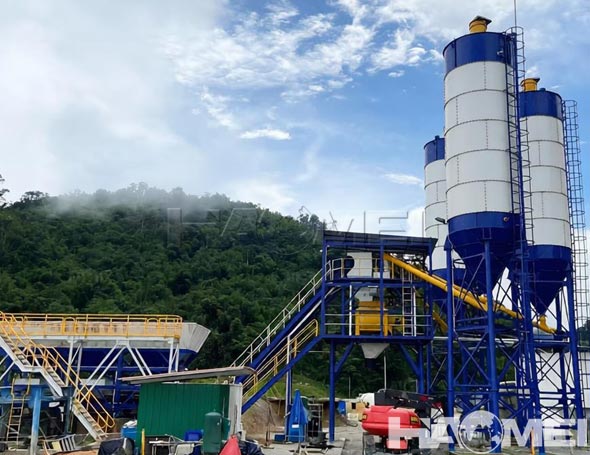
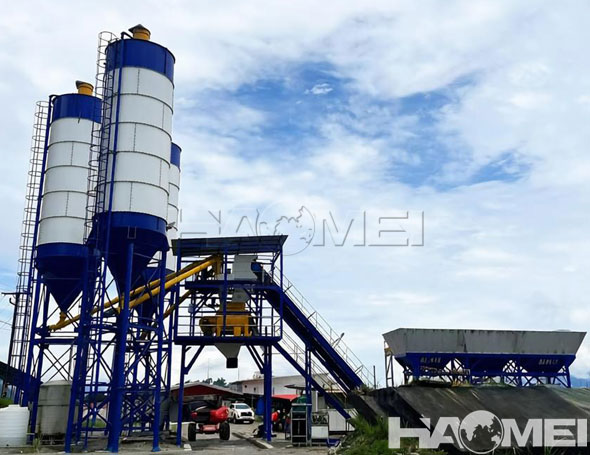
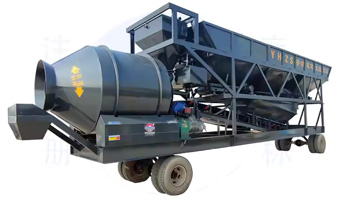
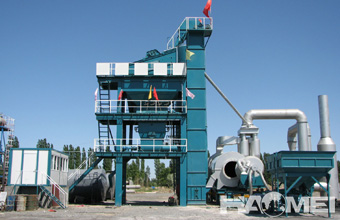
Core equipment represents the primary cost component, accounting for 55%-65% of the total project investment. The industry-standard HZS-series stationary concrete batching plants are categorized into three capacity tiers, with specific FOB factory prices corresponding to defined configuration standards.
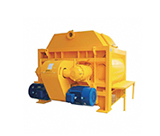
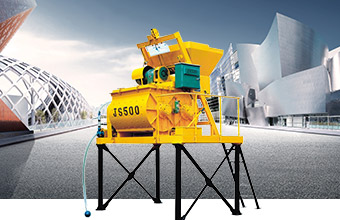
The small-capacity tier includes models from HZS25 to HZS60, primarily designed for rural infrastructure and small-scale construction projects. The HZS25 - featuring a standard JS500 twin-shaft mixer, two 50-ton powder silos, and a basic electrical control system - has an FOB price range of $22,000-$38,000. The HZS35, equipped with a JS750 mixer, ranges from $35,000-$51,000. The HZS50, configured with a JS1000 mixer and two 100-ton powder silos, costs between $48,000 and $65,000, while the HZS60, featuring a JS1500 mixer, ranges from $70,000-$92,000.
The medium-capacity category encompasses the HZS90 and HZS120 models, which serve as the primary choices for commercial ready-mix concrete plants in county-level regions and for medium-scale infrastructure projects. The HZS90 is equipped with a JS2000 mixer and three 100-ton powder silos, with an FOB price ranging from $112,000 to $145,000. The HZS120 features optimized batching and conveying cycles, achieving a theoretical hourly output of 120 cubic meters, with a price range of $138,000 to $182,000.
The large-capacity category covers the HZS180 and HZS240 models, designed for core urban commercial concrete markets and mega-infrastructure projects. The HZS180 includes a JS3000 mixer, four 1,000-ton powder silos, and a comprehensive pulse-jet dust collection system, with an FOB price of $152,000 to $198,000; the HZS240 is equipped with a high-capacity JS4000 mixer, priced between $225,000 and $260,000.
The total cost of project implementation includes the price of the equipment itself plus various supporting investments, with the proportion of each cost component remaining relatively stable. Civil engineering works account for 15%-20% of the total cost, covering equipment foundation pouring, site paving, and the construction of auxiliary facilities; these costs are directly influenced by local labor rates, building material prices, and geological conditions. Transportation and customs clearance expenses account for 8%-14%, varying based on the distance to the destination port and local tariff policies. Installation, commissioning, and calibration - including on-site hoisting, system testing, and personnel training - make up 4%-7%. Initial working capital, covering the procurement of the first batch of raw materials and spare parts, accounts for 10%-15%. Based on comprehensive estimates, the total landed cost for a small-scale plant ranges from $80,000 to $180,000; for a medium-scale plant, $250,000 to $450,000; and for a large-scale plant, $450,000 to $750,000.
The primary drivers of cost variation are equipment configuration upgrades and local site-specific conditions. Adding one 1,000-ton standard cement silo increases equipment costs by 9%-13%. Upgrading to a fully enclosed material storage shed, along with pulse-jet dust collection and aggregate/sand recovery systems, raises the total cost by 16%-25%. Implementing an intelligent central control system and remote data traceability adds another 11%-19%. Furthermore, challenging site conditions - such as soft soil foundations, high altitudes, or low-temperature environments - necessitate additional adaptation costs, potentially increasing the total investment by 15%-30%.
Based on Haomei Machinery’s extensive experience with overseas projects, approximately 30% of first-time investors underestimate costs related to civil engineering and customs clearance by focusing solely on the price of the equipment itself, ultimately leading to budget overruns of 15%–30%. We strongly recommend conducting a geological site survey and verifying local regulations in the target country before investing. Haomei offers complimentary site planning, precise cost estimation, and end-to-end implementation guidance to develop an optimal, customized configuration for your specific project requirements.


