

Mini Self Loading Concrete Mixer Machine
2026.08.26
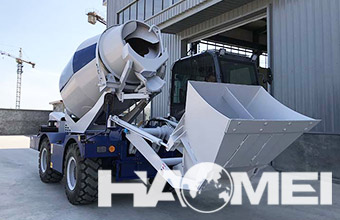
Mini self loading concrete mixer machine, such as the 1.8 cubic meter and 2.6 cubic meter models, are not simplified versions of large equipment, but rather independent solutions tailored to decentralized construction scenarios. Their capacity specifications, structural design, and performance configurations are all designed to address the real pain points of small-scale projects.
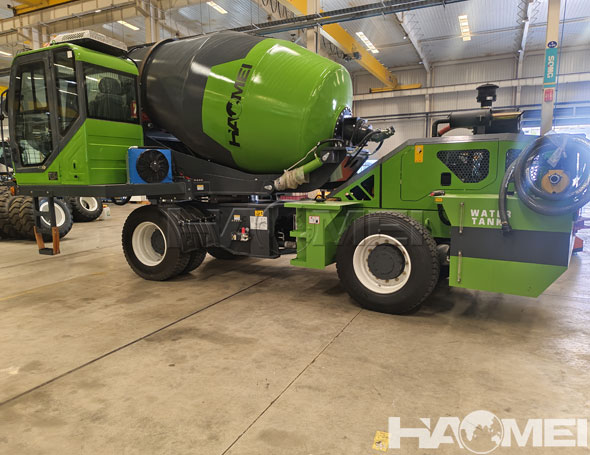
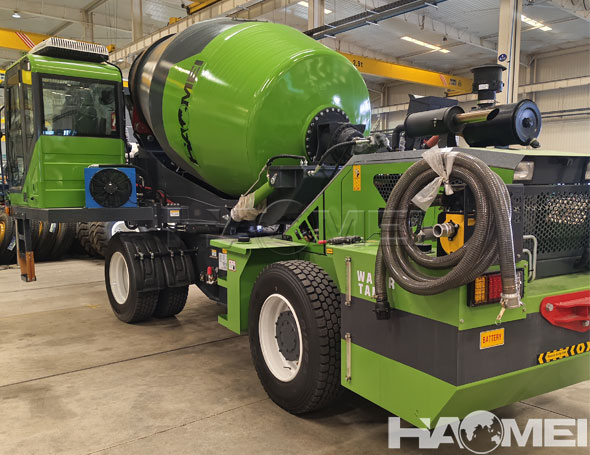
The 1.8 cubic meter mini self loading concrete mixer is equipped with a narrow-body engineering chassis, with the overall width controlled within 2.2 meters, allowing it to easily navigate rural roads with 2.5-meter width restrictions and narrow streets. Powered by a 58kW 490 series engine, it boasts ample power reserves, with a single tank completing a full cycle in just 8-9 minutes. Its stable daily production capacity reaches 70-80 cubic meters in 8 hours, perfectly matching the daily pouring volume of small-scale projects such as rural road hardening, small ditch repair, and courtyard flooring, virtually eliminating idle capacity.
The 2.6 cubic meter mini self loading concrete mixer represents the optimal efficiency point for smaller models. With only a 0.2-meter increase in width, it raises the single tank output to 2.6 cubic meters, controlling the single tank cycle time to 9-10 minutes, achieving a daily production capacity of 110-120 cubic meters. Balancing maneuverability and operational efficiency, it is the mainstream choice for small-to-medium-sized municipal repairs and rural public facility construction. Both models come standard with independent metering systems, ensuring the overall error in the proportions of sand, cement, and water is controlled within ±1.5%. The mixing drum speed remains stable at 12-14 rpm, and the homogeneity of the finished concrete fully meets engineering standards.
The irreplaceable adaptability to various scenarios is the core value of these mini self loading concrete mixers. Both models have a wheelbase of less than 2.4 meters and a minimum turning radius of no more than 3.5 meters, allowing for flexible operation in areas inaccessible to large equipment, such as courtyards, factory premises, and mountain trails. Equipped with an engineering off-road chassis and large-tread tires, they can climb slopes up to 25° when fully loaded, and can also navigate unpaved, muddy roads. Crucially, the equipment requires no external power or auxiliary loaders; a single unit can complete the entire production process from raw materials to finished product. For example, in many rural projects I've encountered in Southeast Asia and Africa, the distance to the commercial concrete plant is often hundreds of kilometers, making it impossible for large concrete mixer trucks to even enter the village. These mini self loading concrete mixer machines don't solve the problem of "efficiency," but rather the fundamental issue of "whether the project can be implemented."
Meanwhile, the low barrier to entry for operation and maintenance and the high return on investment make mini self loading concrete mixer machine the first choice for small and medium-sized contractors worldwide. A single unit requires only one operator, replacing a traditional 3-4 person manual mixing team, reducing overall labor costs by more than 60%. The entire machine adopts a mature modular structure, with highly interchangeable hydraulic systems and power components. Routine maintenance and basic repairs do not require a professional technical team, making operation and maintenance easy even in remote areas.


